When an Attorney General decides to take control of individual legal cases the President has expressed personal interests in, that is an assualt on the idea of an independent system of justice.
-30-
Currently reading: A Very Stable Genius: Donald J. Trump’s Testing of America by Carol D. Leonnig and Philip Rucker
With >85% reporting it’s Sanders’ night in New Hampshire. Unclear how much of the internecine shadecraft so extensivelyreported between the Sanders and Buttigieg camps are representative long-term, nationally (and minus Twitter) ; also unclear how much of the current bad feeling will matter beyond the Convention.
Klobuchar’s NH results are the most interesting tonight. Klobuchar outperformed most estimates set for Warren, who — while beating Biden– according to polling was slated to finish two spots ahead of Klobuchar. She really is the unsung winner of the primary tonight and I suspect that will be a story in the coming days.
–30–
Currently reading: Agency by William Gibson Currently listening to: Separate Realities by Trioscapes
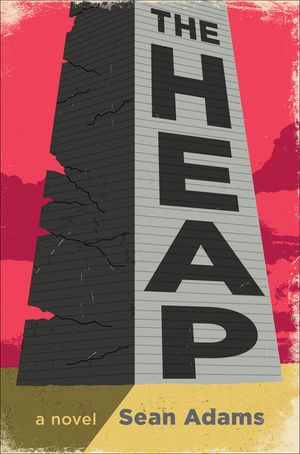
Every morning Orville Anders rises and digs amid the ruins of Los Verticalés. Once a marvel of architectural engineering, Los Verticalés now lies collapsed amid an apparently vast and unidentified desert. Developed by a visionary entrepreneur, Los Verticalés was designed to be a self-contained civilization of sorts, a modular skyscraper that could be expanded—upward and outward—as demand (and population) increased. At some point, it reached over 500 stories in height – but then shortly thereafter, the skyscraper collapsed in a single tragic event. Orville, and the others who camp around the wreckage, spend their days searching for reclaimable materials and for survivors, including Orville’s brother, Bernard, the lone known survivor of the collapse, buried somewhere deep within The Heap.
Bernard is buried in the rubble, trapped in the radio studio he was broadcasting from during the collapse. He spends his days broadcasting over the radio frequencies, taking calls from the surface and keeping hope alive for other survivors who may yet be found as a result of The Dig. Bernard has daily contact with his brother Orville in the evenings, the latter calling in to the radio station after the digging of the day is completed. The calls are broadcast live and eventually, as it happens, they come to be among the most sought after moments of media across the world; folks far and wide tune in to hear the brothers talk. One brother buried alive, with no idea where he is or how to explain how to reach him, and the other with just a shovel and hope – also with no idea how to reach him.
It isn’t long until the powers that be have just one small question for Orville: during his daily conversations with his buried brother, would he mind just quickly saying a quick word from our sponsors?
And with the ask, the book is off and running. Doing a not inconsiderable amount of work with the metaphor described above, the author, Sean Adams, takes a mighty swing at parodying our current moment. Writing in a braided narrative style for roughly 300 pages, Adams takes turns expressing narrative flourishes of absurdity, unfairness and other ideas that make you tilt your head ever so and wince a little, wondering just how much of what you just read actually applies to the actual world you actually inhabit. In this trick, ongoing as it is, The Heap ends up as an impressively competent reference point; the reader can crawl around in the narrative gauging where we are — actually, corporeally— in the current Zeitgeist.
Where I’m from, that last part is fancy talk, and I should pause here to make sure it is understood that the voice expressed in the book is not at all fancy. In fact, that is probably the heftiest critique I have for the The Heap, namely that the writing is kept to about a tenth grade reading level. It reminded me a great deal (for reasons) of George Orwell’s 1984. The procession of narrative – sequential and staccato sentences in a just-the-facts-ma’am style moved the book along quickly, but definitely at the cost of depth. The plot is superficial—consistently so, to its credit; the characters are all about an inch deep, but it still works. The book tells a tale; it is not playing with language. Your favorite sentence will not be found in this book. The tale is dystopic and expressed in a uniform voice. The book isn’t great – not in the way that the greatest novels are great at least – but The Heap is great fun, and Sean Adams deserves any success that comes his way for having written it.
Sunday, February 9, 2020: (computer) algorithms are increasingly deciding who should be released from prison and who should stay, who gets probation and what the terms should be, and otherwise reducing social decision making within legal systems in the US and abroad. Any moral system of justice demands good faith negotiations with concepts like deterrence, rehabilitation, restitution, retribution, and messy, messy context*. Are we cool with just writing some code and letting the processors take care of it? (hint: I’m not)
The results of the 2019 VOTER Survey (Views of the Electorate Research Survey) was released last month. Despite reflecting poll answers from about a year ago, its scope certainly makes up for the delay. There are 500+ pages of statistically significant information available here; if you are at all interested in what Americans think, you should check the Top Lines and Cross Tabs. (or just ask all of them the questions)
This was a cool primer on the Iowa Caucuses (RIP). Also, despite the rending of garments and gnashing of teeth (most notably from CNN) on caucus night, I will just go on record as being more annoyed by political reporters with a sense of entitlement to quick caucus results than I was by the delays from the Iowa Democratic Party in releasing the results. Between the conflicting priorities of timeliness and veracity, the latter should never be given any shortness of shrift.
I’m playing the banjo in 2020. Focused on the instrument, I find stuff:
Banjo magic above.
I’ve recently picked up Why We’re Polarized by Ezra Klein. Tyler Cowen has apparently read it (twice). They both had a very sharp conversation about it here.
New Hampshire is on Tuesday. This is what it looks like now:
The Oscars are happening as I type. Of the 9 films nominated for Best Picture, I’ve seen 5 of them and rank them as follows: #1. Parasite #2. Jojo the Rabbit #3. Once Upon a Time in Hollywood #4. 1917 #5. Joker. If anyone beats Scarlett Johannsen for best supporting actress from Jojo the Rabbit, I will be very interested in seeing their performance; similarly, it is hard to imagine Joaquin Phoenix not winning Best Actor.
This little tool can reveal all roads in your town & present a nice and downright tidy graphic representation of the same in the process. It was built by Andrei Kascha, apparently a Seattle-based fellow, who also has this cool little gadget that makes coffee mugs from your favorite topographies. The aesthetics are on point.
The WaPo reports on how Facebook tracks you, even when you’re signed out. Vox also covers it here – although with a more hands-on tone. The NYTimes reported on how your Facebook friends are the company’s enabler’s as they amass your biometric data. But, so they’re tracking you while you’re offline and harvesting your facial recognition signatures — they would only do that for your benefit, I’m sure.
Everyone knows our night sky (a common good) is being ruined, right? Space X’s Starlink program — and Amazon’s Kuiper program — may be the current megaconstellation projects decimating our ability to view an unpolluted night sky, but when it comes to satellite pollution others want to give it a whirl too.
Google has a new-ish dataset search tool that has been released. I tried using it twice but kept rabbit-holing to FRED and never leaving each time. Also, FRED has good data.
I stumbled onto some work of Timothy Duffy (IRL) via a monograph, Blue Muse, published by UNC Press. For any fan of photography, the blues, ‘alternative processes’, tintypes or other such topics, I would recommend checking him out. (he apparently uses 12″x20″ tintype plates to capture portraits and record images of pioneers of southern music if that give you any sense of where he’s at on the just-like-all-the-other-photographer-do continuum) He has been at this for a while.
…and my thing this year is currentness. At the turn of the year the idea occurred to read only new books for a year. As a sort of experiment – and to just take a sample of what the current state of (literature/publishing) seems like to me.
So far in 2020, only The Heap–released on the 8th of January and authored by Sean Adams–has piqued my interest (review coming). I’ve finished titles I started in 2019 — Samantha Power’s Education of an Idealist (review coming) and (making progress on) Matthew Walker’s Why We Sleep— but it turns out I don’t really get excited about a lot titles being dropped each Tuesday. Which makes today a big day.
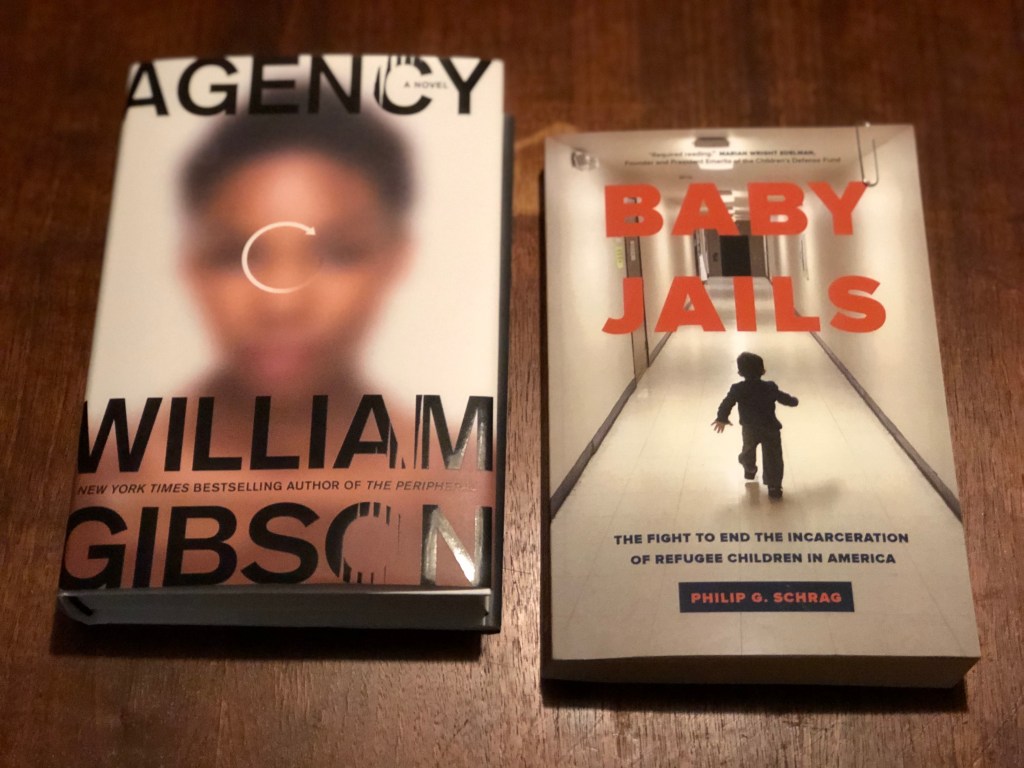
THREE books were released today that I’m interested in; the two above and American Dirt by Jeanine Cummins. My parameters for this year’s reading are essentially: (a) did the book get released in the last 14 days? -and- (b) do I think it might be worth reading? As of today I feel a lack of reading material is no longer imminent, and look forward to future publications in 2020.





 griff.works