 from the NYTimes, this was Times Square Wednesday Night.
No comments on quickly…
from the NYTimes, this was Times Square Wednesday Night.
The piano is an instrument I’m working on this year; originally, to learn how to read music (so much more to say about that later!) but increasingly I’m interested in the instrument of its own accord. To that end, lately I’ve been focused on the first few episodes of The 23 Greatest Solo Piano Works, presented by Robert Greenberg. As part of The Great Courses, the 24-episode series isolates a particular solo piano work and not only breaks down the piece but contextualizes it amid the life and times of the composer. If one is ever interested to know what makes a Toccata different than a Bagatelle–which I admit is not something I was desperate to have answered a week ago–or perhaps learn new ways to spot and understand what is going on within classical compositions, this may be of interest. If you prefer books to lectures, he seems to have you covered there as well.
The lectures on Bach have me revisiting J.S. Bach, to the point where I can’t leave it to listen to other things. Not covered in the course listed above, but particularly ridiculous, magnetic and magical, is Bach’s Partita in D minor for solo violin – played here on piano (Spotify link).
Working from home during this first wave of the COVID-19 pandemic (West Coast, USA) has allowed me to play banjo and keyboard mid-day, which is a real treat, and also to spend those commuting hours getting more sleep in the morning and playing more music (or more Playstation video games just as often) in the early evening. I also find myself paying less attention to podcasts, twitter and news throughout the day now that my routine is altered; I suspect I’ve been using those more as entertainment during commutes than as the intentional choices I previously would have held them to be.
Turning to photography, we and the color recently turned me on to Ludwig Favre who is killing it with color and composition. This pastel palette he’s using turns the everyday into something that’s —
 — really, quite something. Check him out.
currently reading: Agency by William Gibson
last full listen: Bach by Helene Grimaud
-30-
A week after most technology companies in the Bay Area mandated work from home (WFH) protocols, my (non-tech company) employer followed suit. I am happy to not be commuting via public transit for the forseeable future and look forward to marking off 14 days on the calendar now that the largest exposure factor I had to COVID-19 is not a weekday routine. Plans for the extra two hours/day that were usually spent in commute include solo bike rides and learning how to read music for the piano (as I continue learning to play the banjo). Maybe indoor cycling… idk – I might re-up that Zwift account.
Also organizing/decluttering the house–since it will be our sole lived environment for a while–seems like a good plan.
If anyone reading this wants a FREE resource for the coronavirus outbreak, The Washington Post offers a Free Newsletter mailed to your inbox daily.
Ok. enough COVID, already…
I saw The Fall, directed by Tarsem Singh, last week. It was everything it had been hyped to be, and probably more. Of all the reviews I’d seen, I suspect I like Roger Ebert’s the best when he calls it: “…a movie that you might want to see for no other reason than because it exists. There will never be another like it.”
What else… ? This used to be interesting… prior to my focus on virus-related and social distancing concerns, I was enjoying the thoughtful and entertaining work from Danya Tortorici on Instagram. (but not on Instagram) She’s a talented writer and I look forward to reading her prose more.
There is apparently still a debate tonight – I hope this will be the last one. I’m not sure why Bernie* is still pretending to be in tbe hunt for the Democratic nomination. Unlike the other major party during the previous cycle, in 2020 at least, the {Democratic} Party decided.
-30-
It looks like partisan identification is significantly influencing how Americans are viewing the COVID-19 outbreak in the US. Recent. Results from a Mar 2nd-3rd Reuters/Ipsos poll:
The ranking options were one to five, with one being “no threat” and 5 being “an imminent threat.” The plurality of Republicans (30%) ranked the threat at 3 while the plurality Democrats (38%) ranked the threat COVID-19 poses at 5. The distribution across all ranking options diverged according to party identification with an obvious partisan bias.
The full poll is available online. Results above are on Pg 2 of 18.
“It is we who give meaning to things, and on that basis create the world.” Karl Ove Knausgaard had a feature in last Sunday’s New York Times Magazine. Having just gotten around to it, wanted to pass along that In Search of Anselm Keifer is worth taking the time. Surreal, insightful, unexpected and just kind of gorgeously written, its the first I’ve read from him.
I sat down with Only God Forgives this week and was pleasantly impressed with this dark, disturbing film from Nicolas Winding Refn. It will not be everyone’s cup of tea to be sure — but for anyone looking for bold cinematography and a courageous approach to storytelling, this might be up their alley. If you obsess over photography or light, consider this a recommendation.
currently reading: Agency by William Gibson
last watched: Hotel Artemis Drew Pearce, director. (2018)
last full listen: Three Originals by Baden Powell
-30-
I was talking to a group of colleagues last week about the Oscars and films from 2019, and afterwards, one asked me to explain what I was speaking of regrading color. I think I recall a very good YouTube tutorial explaining LUT files in Photoshop within the context of color theory, but I could not find that. While looking, I did find this, which is what I sent my colleague and felt would be worth passing along here.
Current status: Perplexed.
So says the social media accounts of many of my friends, flummoxed by the continued support of The President amid his latest incompetence, scandal, malfeasance or other recently reported noxious thing. Long resigned to the loathsome nature of the man in office, they question his enablers and supporters instead:
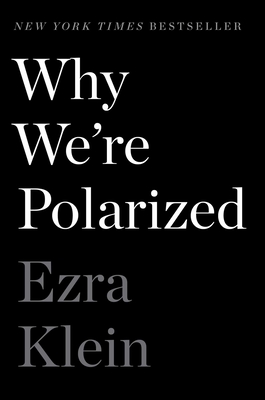
Why We’re Polarized constructs a view I wish those friends would sit with.
I think it is safe to say that the dominant view of partisanship has been—and probably still is—tied closely to ideology: we’re all smart people, Homines economici in the realm of ideas and the ideas we adopt determine our choices and our affinities. Increasingly, research shows this might not be exactly right. It may be the case that how we think of ourselves (and anyone who is not us) determines much more than we are conciously aware of. Perhaps, how we identify ourselves has more impact on us, has more deterministic consequence over what we do, than does our supposedly objective assessments of the world and how we should act within it. Self-ascribed or personally adopted identities—in some cases—may be the reason we believe certain ideas in the first place.
Ezra Klein compiles a succinct (but competently sufficient) history of research explaining how identity and affinity interacts with ideas like group conflict, confirmation bias, and self-interest. Astutely, he considers this amid the tension between a politics dominated by parties on the one hand, and a constitutional framework constructed with no consideration for the rise of parties on the other. He brings the role and motivations of media entities into the mix, constructing a framework that just works — ridiculously well, in fact. He gets the job done in explaining–as advertised–Why We’re Polarized.
He accomplishes it in an entertaining, conversational manner to boot–never really going so far in the weeds that he loses the scent of a compelling narrative. He offers insights and a few ideas along the way that, alone, are probably worth the cost of the book. While the book is clearly about the political–the axes of polarization referenced are the Republican and Democratic Parties–the book is situated within the larger social realm. For all these reasons, the book succesfully navigates a not-uncomplicated subject in a way that is quite approachable — more than most others in this space I suspect, and I’m thinking here of Sides, Tesler and Vavreck’s Identity Crisis: The 2016 Presidential Campaign… [a fucking brilliant work!} as the point of comparison.
This is an impressive book and was exceedingly well put together. I recommend it with no hesitations. Specifically, to anyone who finds themselves asking any of the questions laid out in bullet points above, just go get a copy now — but I also recommend it to anyone who has never encountered much information on the role of identify and affinity in determining own thoughts and actions. This will definitely open new (and fascinating) concepts to those readers and perhaps help bring a little more skepticism and consideration into the world as a result.
-30-
That we have a neatly scheduled day every four years consisting solely of chronologic remainders — each a crumb from the annual difference between the actual rate of Earth’s orbit around the sun and the convention we use to measure that orbit — seems intensely cool to me and may be worth reflecting on. Also worth considering: The Sun is slowing Earth’s orbit exacerbating this difference. If every year since 2016 seemed longer to you, that’s because they were. On the up-side: more frequent leap days are in the works!
Music: Finding new music I like seemed/seems an increasingly difficult process to me; I’ve been working on identifying reliable resources to pick up on new music as of late. Luke Muehlhauser’s quarterly playlists on Spotify have been worth paying attention to since I found them, and props are always in order for KALX and KCSM playlists (in particular, Matokie and Agapanthus at the former and Michael Burman at the latter, usually have tracks I find worth repeated listening).
And that is why I am making playlists now. (The internet needs more.)
Ahead of hiking season, my backcountry and alpine wilderness goals this year will likely include some notable first attempts.

Julia Margaret Cameron (1815 – 1879) was introduced to me outside a university darkroom by an adjunct professor (and later, a good friend of mine), Joshua Dommermuth, who basically held a monograph of hers in front of me and yelled LOOK AT IT for about an hour.* The soft focus of her lens, the ‘window’ light illuminating nearly every subject, the composition and just the feel of her portraiture was simply sublime according to Josh. I vaguely agreed with him at the time; I agree more with his assesment now. It is a thing that gets truer as time proceeds. She seems to capture the person, not just the face. If you don’t know the work of Julia Margaret Cameron, you should.
*others may remember this differently; who is to say who is right?
recently, there was a contest to see who could take the best picture underwater. this one seemed pretty good:

Thomas Picketty released a new book–Capital and Ideology–last year; the english translation is set for release next month. He is making the rounds in the podcast universe. Apprarently, the book is even longer than Capital which means I may just focus on some pretty new charts instead.
The Hell of the North is coming. Second weekend in April. Photos from last year’s race, are here. For anyone unfamiliar with Paris-Roubaix, I would argue that you might not even need to be interested in cycling to enjoy this one. Just a pure affection for sport, adversity or competition will do. It truly is the Queen of the Classics.
“Barring a shock to the system, Democrats recapture the presidency.” On July 1, 2019, Rachel Bitecofer posted her 2020 electoral predictions – and she seems to be pretty good at this as of late. Six months later, the following passages may be of interest:
“By and large, I don’t expect that the specific nominee the Democratic electorate chooses will matter all that much unless it ends up being a disruptor like Bernie Sanders.”
“Indeed, the only massive restructuring I might have to make to this forecast involves a significant upheaval like the entrance of a well-funded Independent candidate such as Howard Schultz into the general election”
“…on Election Day Donald Trump will earn the vote of somewhere around 90% of self-identified Republicans. And as 2018 demonstrated, Republicans will increase their turnout rate over 2016. This, combined with a floor for Trump among Independents of around 38% (because of right-leaning Independents) and an infusion of cash that will dwarf his 2016 efforts, Trump has a floor that is at least theoretically competitive for reelection and will force Democrats to compete hard to win the presidency.”
So yeah, COMPETE HARD y’all!

The X100F by Fuji is my favorite camera of any I’ve owned. Fuji is releasing an update, the X100V and it looks legit. There is no reason to own both; if anyone is stuck in a DSLR rut, these cameras might offer a way out.
finally, on a dark note — from Michael H. Keller, NYT investigative reporter:
“It’s not altogether uncommon in investigations, for us to turn up information that is shocking and disturbing. the challenge is when in the course of your reporting you come across something so depraved and so shocking that it demands attention — People have to know about this. But nobody wants to hear about it.
How do you tell that story?“
The Daily (podcast) tries to tell that story – they’ve released Part 1 of a story delving into the problems of online sexual abuse imagery. Of the many, many points made by this first episode in the series, I’ll leave just one here: With a lack of funding to address the issue, law enforcement agencies are forced to prioritize resources; sometimes that ends up being a directive to only address cases involving toddlers and infants.
i am floored.
-30-
When an Attorney General decides to take control of individual legal cases the President has expressed personal interests in, that is an assualt on the idea of an independent system of justice.
-30-
Currently reading: A Very Stable Genius: Donald J. Trump’s Testing of America by Carol D. Leonnig and Philip Rucker
Currently listening to: Rational Security Podcast #249: The “Lessons Learned” edition

With >85% reporting it’s Sanders’ night in New Hampshire. Unclear how much of the internecine shadecraft so extensively reported between the Sanders and Buttigieg camps are representative long-term, nationally (and minus Twitter) ; also unclear how much of the current bad feeling will matter beyond the Convention.
Klobuchar’s NH results are the most interesting tonight. Klobuchar outperformed most estimates set for Warren, who — while beating Biden– according to polling was slated to finish two spots ahead of Klobuchar. She really is the unsung winner of the primary tonight and I suspect that will be a story in the coming days.
–30–
Currently reading: Agency by William Gibson
Currently listening to: Separate Realities by Trioscapes
 griff.works